
Memora tells a story of resilience, connection, and care. It captures the journey of families navigating uncharted emotional and practical challenges, offering a space where memories are preserved, bonds are strengthened, and everyday tasks feel less daunting. It tells a story of hope,empowering children and caregivers to find moments of joy, understanding, and togetherness amidst the struggles of a rare and profound condition.

Memora
Department
Design
Program
Design (BDes)
Graduate Year
2026
Specialities
Branding / Editorial Design / Information Design / Package Design / UX/UI Design
Solution
Memora supports children with dementia and their families by using AR technology, AAC and MoCA tools to help with memory recall and daily engagement. The app helps families document and revisit shared moments while encouraging children to take on simple tasks independently. It aims to reduce caregiver stress, improve cognitive stimulation, and promote emotional well-being, strengthening connections and supporting mental wellness for children.
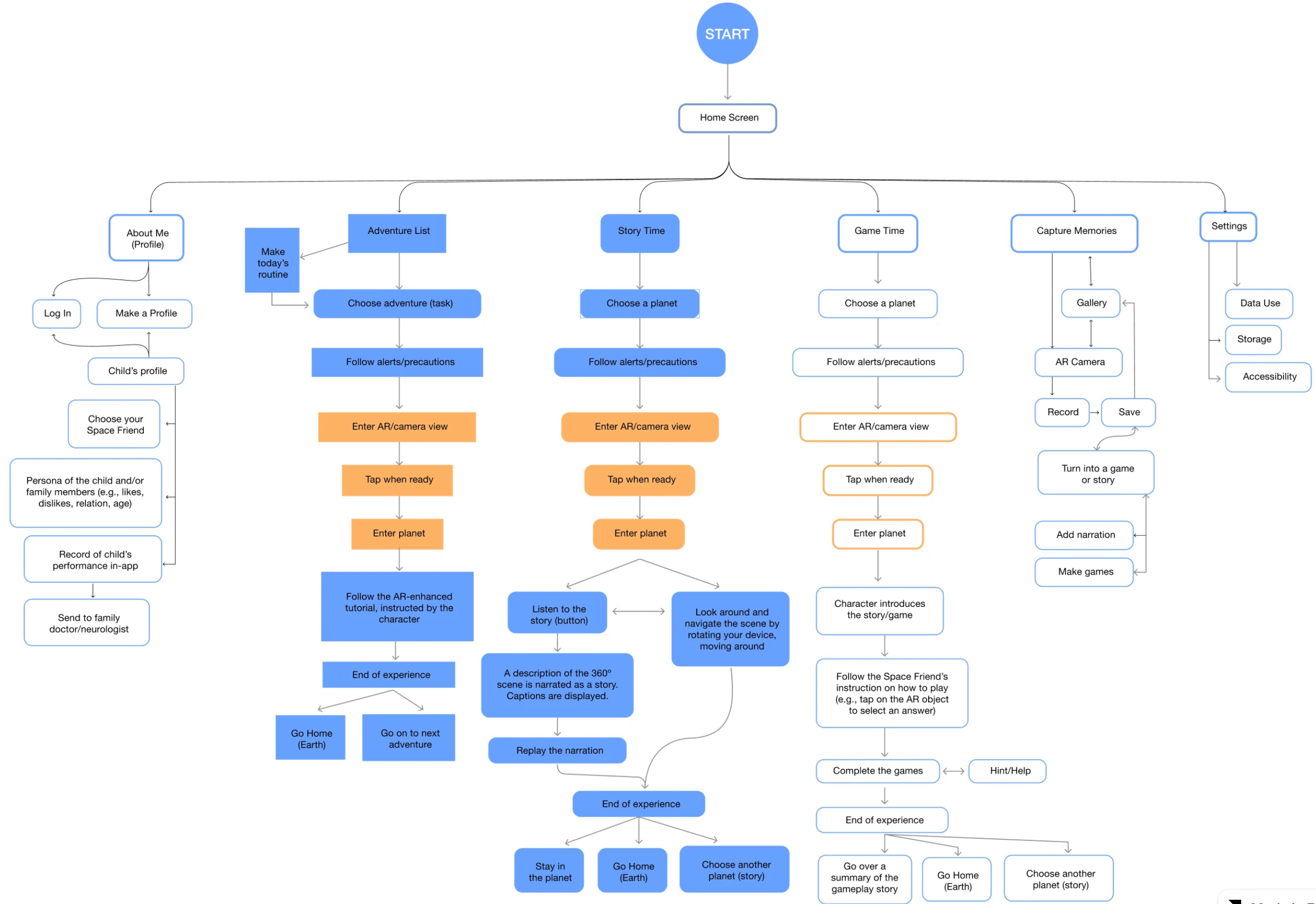
Primary features: AR 360° View & Reminiscence for Children
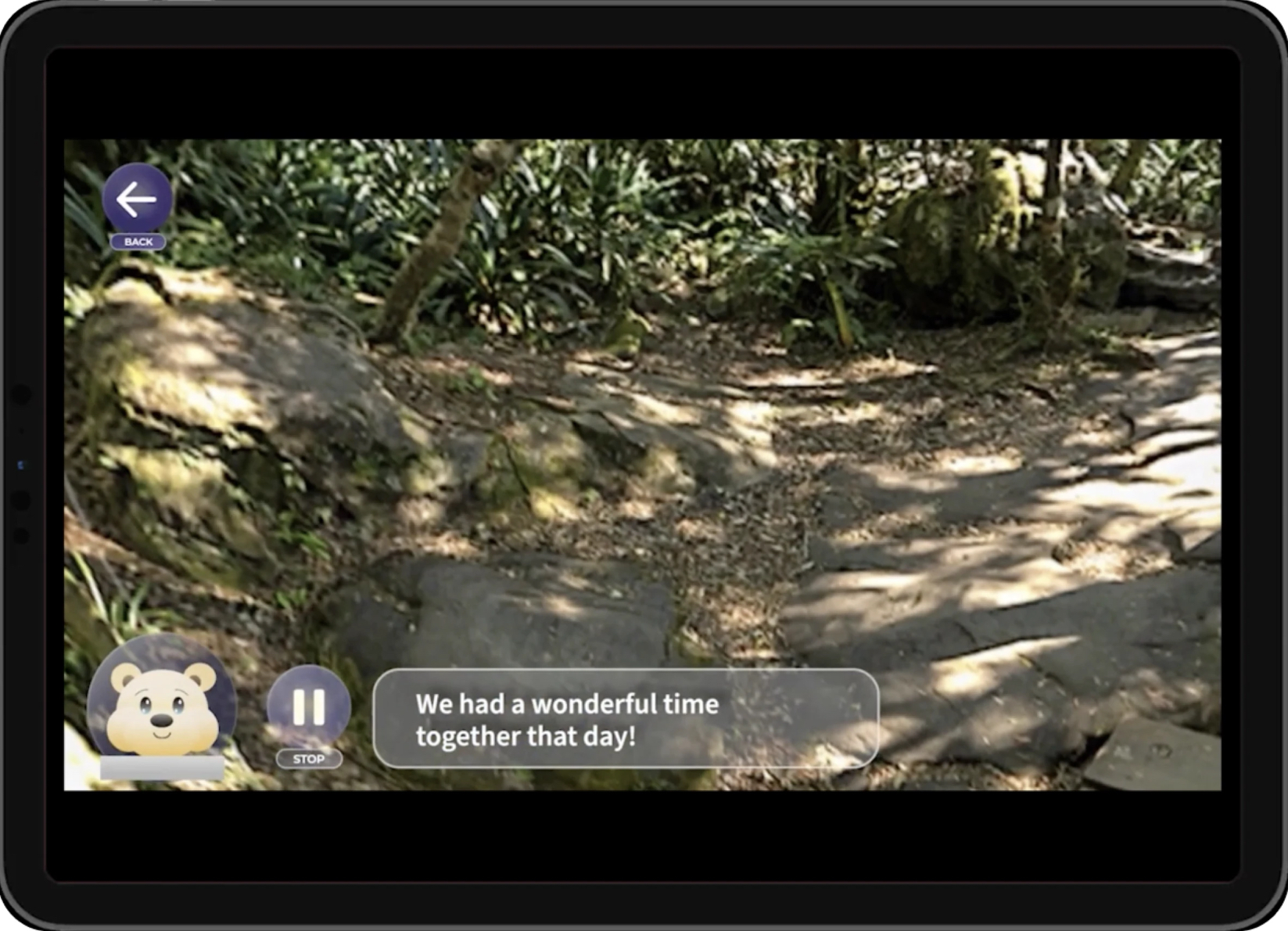
The AR 360° view immerses children in familiar environments, helping them reminisce and relive memories through storytelling and character narration. On-screen captions enhance understanding, making the experience personal and comforting.
Memory Journal for Parents;
The memory journal fosters family bonding, enabling parents to capture and reflect on special moments with their child. It offers an emotional connection, helping families reminisce together and strengthen their relationship.
Parent-Child Collaboration
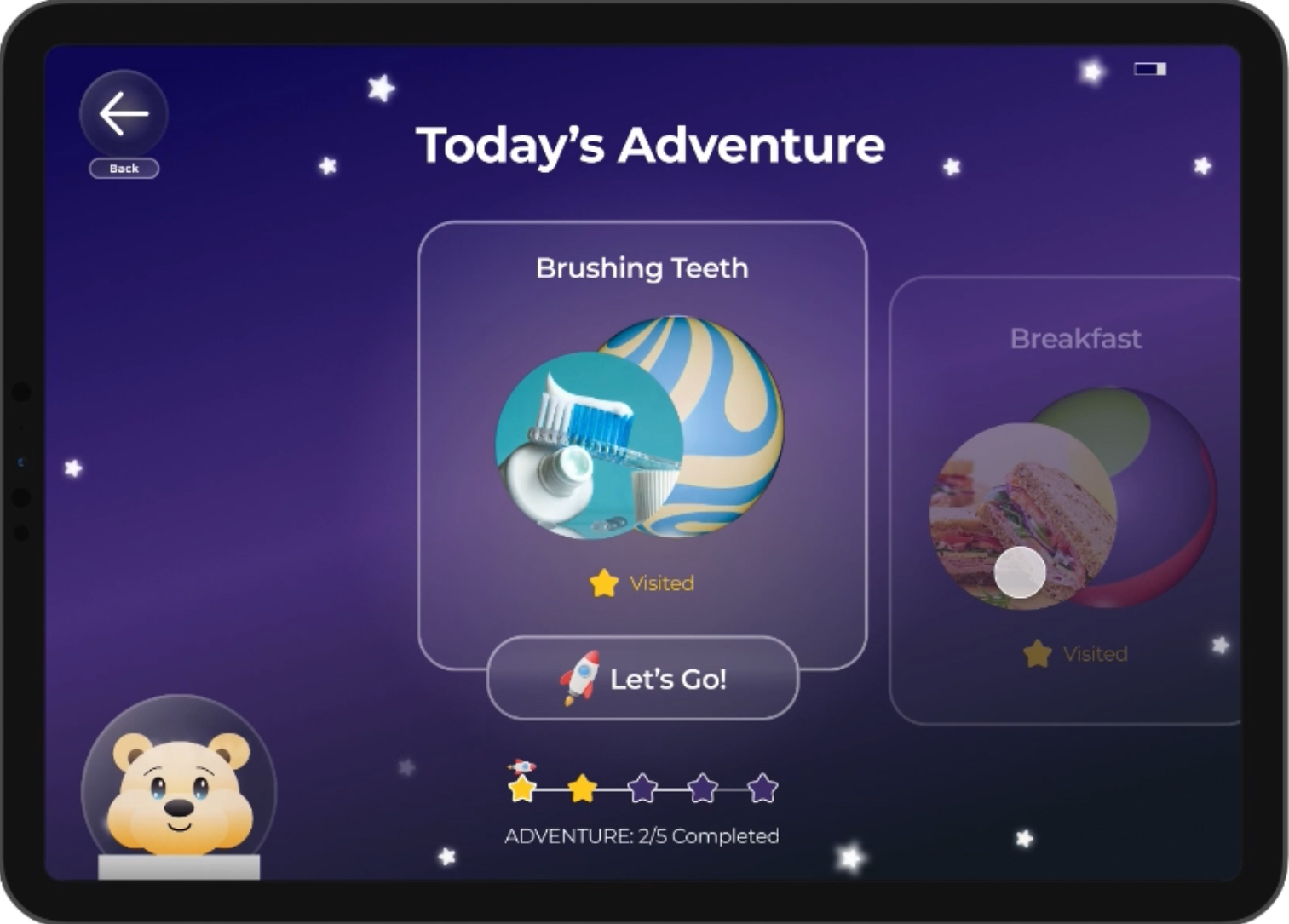
The Adventure List uses AR-guided tasks and step-by-step prompts, fostering the child’s independence and confidence while reducing caregiver stress through simplified supervision.
AAC and MoCA Principles UI Integration
We made sure to use texts plus image in the UI to improve overall accessibility, ensuring that children and caregivers can easily navigate the app and engage with its features without confusion or frustration.
Next Steps / Takeaway
This was my first time working on a medical project, particularly one focused on childhooddementia, a condition with limited research and few existing tools. I learned how to navigate and work within these limitations, prioritizing empathy and user-centered design. Understanding the complexities of both the medical and emotional aspects of caregiving allowed me to refine my design thinking and approach.
Moving forward, we plan to continue developing the features of Memora, with a focus on further enhancing its usability for both children and caregivers. We also aim to explore opportunities for user testing with the help of our professor, who runs a research lab, to gather valuable feedback from real users and improve the app's effectiveness.